
Sleep-disordered breathing affects millions of people worldwide, with studies showing that approximately 30 million adults in the United States have obstructive sleep apnea, yet an estimated 80% of cases remain undiagnosed. The connection between oral health and airway function runs deeper than many realize, creating opportunities for comprehensive care that addresses both dental wellness and breathing quality.
At Airway Dental and More, our practice focuses on identifying and treating airway-related conditions, as research consistently demonstrates the profound impact that breathing problems have on overall health. From pediatric development concerns to adult sleep disorders, understanding these statistics helps patients make informed decisions about their care and recognize when intervention may be beneficial.
Sleep-Disordered Breathing Statistics
The prevalence of sleep-disordered breathing continues to rise. Among adults aged 30-70, moderate to severe obstructive sleep apnea occurs in 13% of men and 6% of women, though these numbers likely underrepresent the true scope of the problem due to underdiagnosis.
Children face significant challenges as well, with pediatric obstructive sleep apnea affecting between 1%-5% of all children, according to the American Academy of Pediatrics. The condition often stems from enlarged tonsils and adenoids, which can block airway passages during sleep and impact cognitive development, behavior, and academic performance.
Increased Risk of Systemic Health Issues
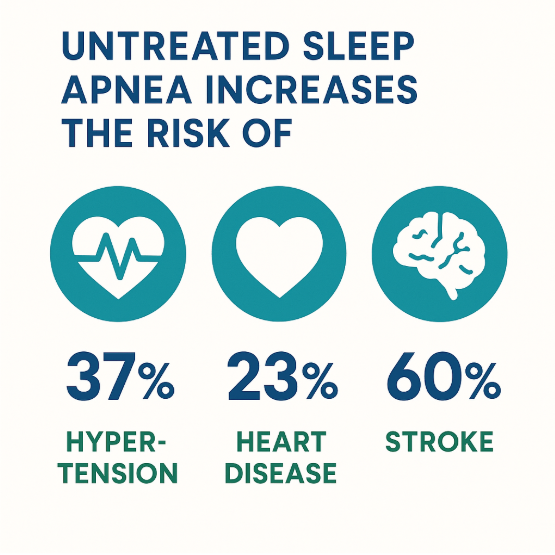
Research also indicates that untreated sleep apnea increases the risk of hypertension by 37%, heart disease by 23%, and stroke by 60%. These statistics highlight why comprehensive airway and sleep services play such a crucial role in preventive healthcare.
Orthodontic and Airway Connection
The relationship between orthodontic development and airway health is also significant. Studies show that children with narrow dental arches are 5 times more likely to develop sleep-disordered breathing compared to those with proper oral development.
Mouth breathing, often related to airway restrictions, affects approximately 10-25% of children and can lead to long-term dental and facial development issues. Children who breathe through their mouths exhibit increased rates of malocclusion, with 40% developing an anterior open bite and 60% displaying posterior crossbite patterns.
Our orthodontic services address these interconnected concerns by focusing on expansion techniques and airway-friendly approaches. This research supports that proper orthodontic intervention can improve airway dimensions by up to 30% in growing children, highlighting the preventive potential of early treatment.
TMJ and Airway Relationships
Temporomandibular joint disorders also have a strong correlation with sleep-disordered breathing, with studies indicating that as many as 75% of patients with TMJ dysfunction also exhibit signs of sleep-disordered breathing. This connection stems from shared anatomical pathways and muscle coordination patterns between jaw function and airway maintenance.
Bruxism, or teeth grinding, affects approximately 15% of adolescents, 8% of middle-aged adults, and 3% of older adults, and often indicates underlying airway issues. According to the Sleep Foundation, patients with sleep apnea are 8 times more likely to grind their teeth compared to those without breathing disorders, suggesting that grinding may represent an attempt to maintain airway patency during sleep.
Pediatric Airway Development Statistics
Early childhood is a critical period for airway development, with significant implications for lifelong health. Research indicates that 70% of craniofacial growth occurs by age 7, making early intervention particularly valuable for addressing developmental concerns.
Tongue ties affect approximately 4-10% of newborns, with impacts extending beyond feeding difficulties to include speech development and oral rest posture. Our tongue and lip tie services address these concerns using minimally invasive techniques, as early release procedures can improve feeding success rates significantly and reduce long-term developmental complications.
Adenoid hypertrophy affects approximately 34% of preschool children, often leading to chronic mouth breathing and associated developmental changes. Children with enlarged adenoids exhibit higher rates of high-arched palates, dental crowding, and behavioral concerns related to poor sleep quality.
Treatment Success Rates
Comprehensive airway treatment approaches show promising results for patients of all ages and conditions. Myofunctional therapy, when combined with other interventions, has been shown to result in a 50-60% improvement in sleep apnea severity scores and subjective sleep quality measures.
Oral appliance therapy for sleep apnea also achieves treatment success in 65-75% of mild to moderate cases, with patient compliance rates exceeding 80% due to the comfort and accessibility it offers over traditional CPAP therapy.
Early orthodontic expansion in children yields especially promising results, with some studies achieving 90% success rates in improving airway dimensions when treatment begins before age 12, underscoring the importance of early evaluation and intervention.
Experience Airway Health Care at Airway Dental and More
The statistics surrounding airway health highlight the widespread prevalence of breathing-related disorders and their substantial impact on overall well-being. Our comprehensive approach addresses these concerns through evidence-based treatment methods, advanced diagnostic technology, and personalized care plans designed for patients of all ages. Dr. Stevenson’s commitment to airway-focused dentistry reflects years of advanced training and a deep understanding of the connections between oral health, breathing function, and overall quality of life.
From pediatric development concerns to adult sleep disorders, our team provides specialized care backed by the latest research and technology. We understand the importance of early intervention, accurate diagnosis, and coordinated treatment approaches that address the root causes of airway dysfunction rather than just managing symptoms. Contact our office at (904) 268-4466 or schedule a consultation to learn how comprehensive airway evaluation and treatment can improve your health and quality of life.