
That tiny band of tissue under your tongue or lip might seem insignificant, but it can silently impact your health for decades if left untreated. Many parents wonder if those little ties will resolve on their own as their child grows. Unfortunately, untreated tongue and lip ties can lead to various challenges throughout life, affecting everything from how you speak and eat to how well you sleep at night.
At Airway Dental and More, we understand how these restrictions can affect overall health and development, so we offer comprehensive evaluation and treatment options for patients of all ages. Our team is dedicated to identifying and addressing these conditions to prevent the complications they may cause down the road.
What Are Tongue and Lip Ties?
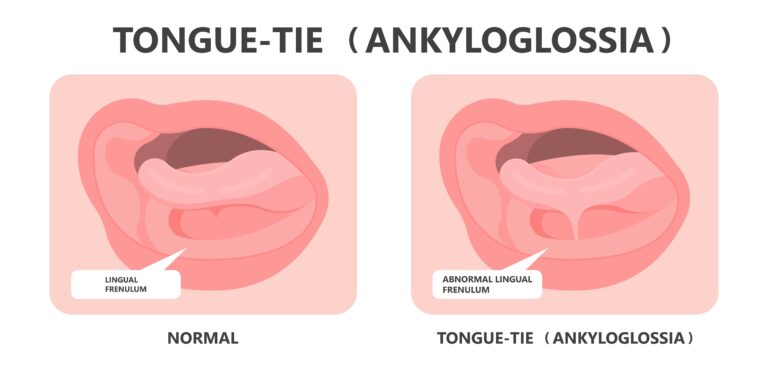
Tongue tie (ankyloglossia) occurs when the thin band connecting the bottom of the tongue to the floor of the mouth is too short or too tight. This restricts tongue movement and function. Similarly, lip ties happen when the tissue connecting the upper or lower lip to the gums is overly tight, limiting lip mobility. Both conditions can present at birth and may affect feeding, speech, and oral development.
When examining patients, we look for signs such as a heart-shaped tongue tip, difficulty extending the tongue past the lips, or trouble lifting the tongue to the roof of the mouth. For lip ties, we check for restricted lip movement and a thick or tight band of connective tissue. When tongue and lip ties are caught early, your dentist can provide more effective intervention before developmental issues arise.
According to the American Academy of Pediatrics, approximately 4-10% of newborns are born with some degree of tongue tie, with many cases going undiagnosed or untreated, potentially leading to long-term complications later in life.
Speech and Communication Challenges
Have you ever wondered why some children struggle with certain sounds despite speech therapy? Untreated tongue ties could be the culprit. Your tongue needs to move freely to pronounce many sounds correctly, especially “l,” “r,” “t,” “d,” “n,” “s,” and “th.” When movement is restricted, these sounds become much more challenging to form.
Children with untreated ties often develop habits that compensate for their restricted speaking patterns. This can lead to the following:
- Trouble being understood by teachers, friends, and family
- Frustration when trying to express themselves
- Shyness or reluctance to speak in groups
- Ongoing speech therapy that might not fully resolve the issue
Unfortunately, these speech challenges don’t always resolve on their own. Without treatment, they can continue into adulthood and potentially affect academic performance, social interactions, and even career opportunities.
Feeding and Nutritional Impacts
Mealtime struggles are often one of the first signs parents notice with tongue and lip ties. What starts as difficulty breastfeeding or bottle feeding can evolve into ongoing challenges with eating. As children grow, untreated ties might cause:
- Pickiness with food textures and avoiding certain foods
- Messier eating than peers
- More frequent gagging or choking on food
- Preferring soft foods that don’t require much chewing
- Taking much longer to finish meals than others
We often hear from parents who thought their child would “outgrow” these eating difficulties, but have found them continuing into later childhood. These challenges can affect nutrition, social eating experiences, and even family mealtime dynamics.
Dental Health Consequences
Your dentist is often the first professional to spot the signs of an untreated tongue or lip tie during a routine checkup. These restrictions can create a domino effect of dental issues that may not be obvious at first glance. Long-term dental concerns may include:
- Cavities forming in hard-to-clean areas, especially behind the front teeth
- Receding gums, particularly around the lower front teeth
- Difficulty thoroughly brushing and flossing
- Teeth that don’t align properly when biting
- Higher risk of developing gum disease
Research from the Journal of the American Dental Association shows people with untreated tongue ties have more gum recession around their lower front teeth than those without these restrictions. This happens because the tongue can’t sweep food particles away and may pull on the gums abnormally.
Airway and Sleep Impacts
One of the most concerning effects of untreated ties is their impact on breathing and sleep quality. Many parents don’t realize proper tongue position is crucial in keeping airways open, especially during sleep. Children and adults with untreated ties may experience:
- Breathing through the mouth instead of the nose
- Tilting the head forward to breathe more easily
- Snoring or noisy breathing during sleep
- Restless sleep or frequent waking
- Daytime tiredness despite adequate sleep time
- Difficulty concentrating during the day
We’ve helped many families who were surprised to learn their child’s behavioral challenges, poor sleep, or chronic fatigue were connected to a simple tongue restriction. Proper tongue function supports healthy breathing patterns both day and night.
Contact Airway Dental and More For More Information on Tongue and Lip Ties
At Airway Dental and More, we offer comprehensive evaluations for tongue and lip ties for patients of all ages. Our approach combines top-notch dental care with a deep understanding of how oral restrictions affect overall health. Dr. Neil K. Stevenson and our team provide gentle, effective treatments, including laser release procedures, that can help address these restrictions with minimal discomfort and faster healing times.
Don’t let untreated tongue or lip ties impact your or your child’s quality of life. Our excellence in dental care includes advanced technology and emerging treatments in airway dentistry to help you breathe, eat, and speak more comfortably. Call us at (904) 268-4466 to schedule a consultation or visit our contact form.